


A practical guide to Finacle monitoring across transactions, applications, infrastructure, logs, and critical core banking journeys.
A customer initiates a ₹5 lakh RTGS transfer through Internet Banking. The request travels through the web server, APIs, integrations, bank-specific business services, Connect24, Finacle, Uniser, databases, and finally reaches the RBI payment system.
If the transaction fails or is delayed, operations teams need to immediately find where the delay occurred. Timely investigation and remediation are easier said than done. This is the real challenge.
Understanding the Finacle Ecosystem
Infosys Finacle has evolved significantly over the years. Many banks continue to operate mature on-premises Finacle deployments comprising web and application servers, Connect24, Uniser, databases, and tightly integrated banking applications. Newer Finacle Digital Banking Platform deployments, on the other hand, are built on cloud-native, containerized microservices running on Kubernetes, communicating through APIs and event streams.
In a digital world, regardless of the deployment model, Finacle is not a standalone core banking application. It is part of a larger banking ecosystem that includes customer channels, API gateways, middleware and integration services, application services, databases, regulatory systems, external payment gateways and partner systems.
Every customer interaction, whether it's an RTGS transfer, UPI payment, loan disbursement, account opening, or balance enquiry, traverses multiple systems before it is completed. Each step generates valuable operational telemetry that, when viewed together, tells the complete story of the transaction.
Why Finacle Requires a Different Observability Approach
1. Business transactions span multiple systems
A customer transaction seldom begins and ends with Finacle. It flows across customer channels, Finacle core, Connect24, Uniser, APIs, business services, databases, payment gateways, and external networks. When there is a problem in any one of these layers, say a delay in Connect24, Uniser processing issue, or a database bottleneck, beyond knowing if Finacle is running, teams should have visibility into the complete business journey so that they can answer:
- Where did the transaction fail?
- Which business service is affected?
- Which customers are impacted?
- Is the issue in the API layer, middleware, Finacle, database, Kubernetes platform, infrastructure, or network?
- What is the business impact?
2. Telemetry Finacle generates is rich but distributed
Finacle environments generate large volumes of operational logs. Unlike enterprise applications where metrics and traces are the primary source of operational insight, Finacle logs contain valuable transaction information, request flows, exceptions, and unique transaction IDs. The challenge is not collecting these logs, but extracting the right information, correlating across multiple systems, and creating an end-to-end customer transaction view.
3. Telemetry collection without instrumenting Finacle
Core banking applications are among the most business critical and highly customized systems in the enterprise. Banks are cautious and anxious about any intrusive instrumentation, agents, or code changes that could affect application stability, complicate upgrades, and impact vendor support.
Traditional monitoring tools rely on application instrumentation, which can cause application instability, and despite that, tend to monitor application and infrastructure performance.
The best approach is to leverage the rich logs Finacle generates and provide operational insights.
4. Every bank runs Finacle differently
No two Finacle environments are the same. Banks operate different versions, customizations, integrations, operational workflows, and older yet compliant logging formats. Some prioritize technical declines, others focus on business exceptions, transaction processing, or regulatory SLAs. Some use older yet compliant and sometimes inconsistent logging formats across channels or users, meaning transaction fields and identifiers are not always consistent.
Effective observability requires banking domain knowledge that understands Finacle's banking semantics, identifies the right transaction identifiers such as RRN, bank-specific priorities, and intelligently correlates events across systems to reconstruct complete business journeys.
This is where VuNet takes a different approach.
VuNet’s Approach to Finacle Observability
VuNet’s business observability platform, vuSmartMapsTM, is purpose-built for banking. It combines deep understanding of both traditional and cloud-native Finacle deployments with pre-built banking intelligence, non-intrusive telemetry collection, and business context correlation.
Whether telemetry originates from native Finacle logs in traditional deployments or from logs, metrics, traces, APIs, and Kubernetes events in modern cloud-native environments, VuNet stitches every signal into a unified transaction view.
This gives banks deep operational visibility while preserving application stability. Operations teams gain a single, business-centric view of every transaction, enabling them to identify failures, understand business impact, and reduce Mean Time to Detect (MTTD) and Mean Time to Resolve (MTTR).
Built for Finacle Operations
VuNet is designed around the operational realities of the Finacle ecosystem.
- Banking-aware log analytics understanding native Finacle telemetry, including Syslog, CI Event Logs, Instrumentation Logs, SigAlarm, Access Logs, Connect24, and Uniser logs.
- Transaction-aware correlation using identifiers such as RRN and transaction IDs to reconstruct complete customer journeys across multiple channels, middleware, Finacle, databases, payment networks, and partner systems.
- Deep operational visibility into critical banking services and its dependencies, including Connect24, Uniser, scheduled processing, batch jobs, and CSIS failover environments.
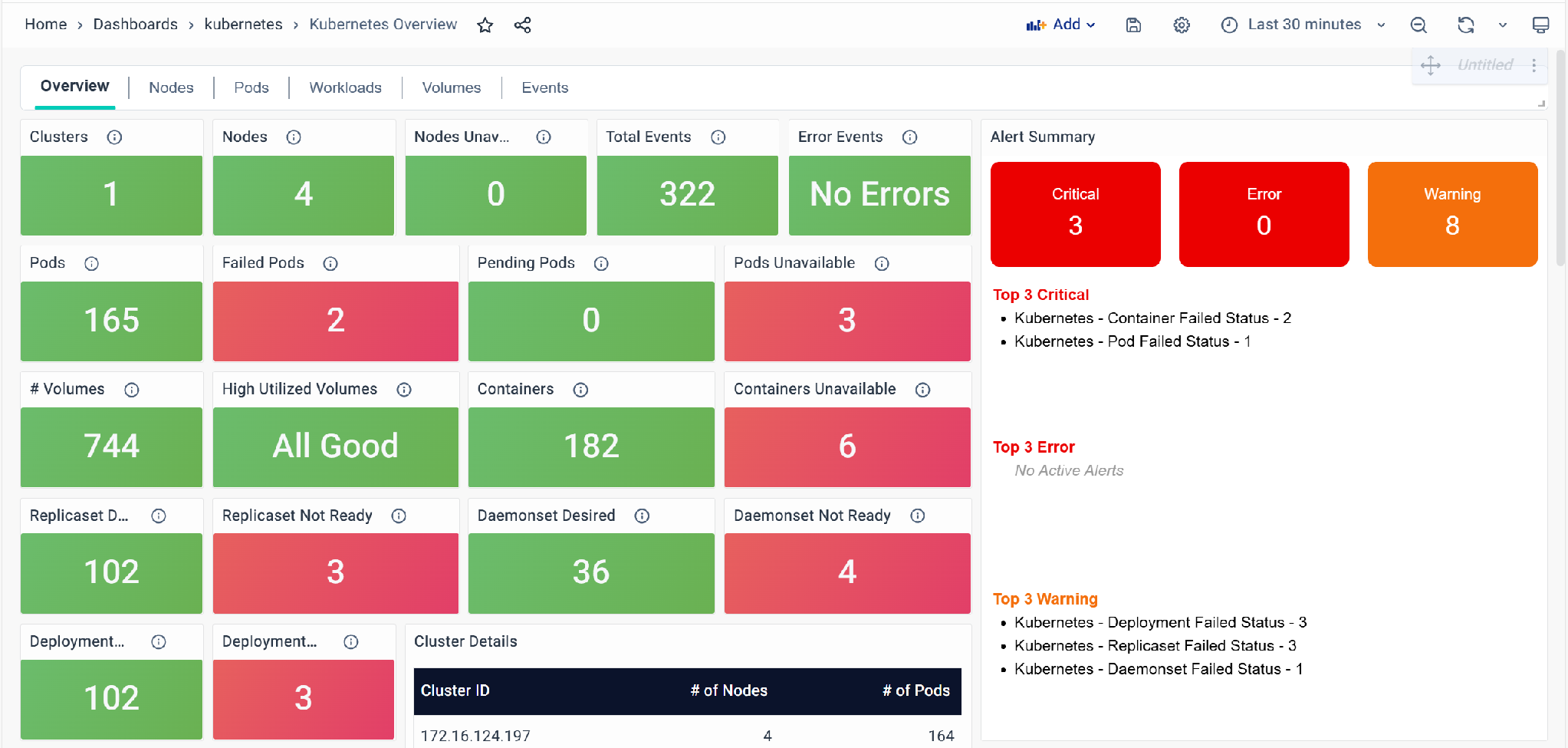
- Cross-layer incident analysis by correlating application, middleware, database, Kubernetes, infrastructure, and business events into a single operational view.
- Unified investigation experience with a single dashboard for transaction tracing using transaction ID or RRN, investigating raw logs, KPIs, infrastructure health, and business impact without the teams having to manually access multiple servers.
Example of Finacle CBS Monitoring: A leading bank observed an increase in transaction declines. VuNet correlated Finacle transaction logs with Oracle database alerts and identified a database performance issue affecting transaction processing. Instead of manually reviewing logs across multiple servers, the operations team traced the issue through a single dashboard, reducing investigation time significantly.
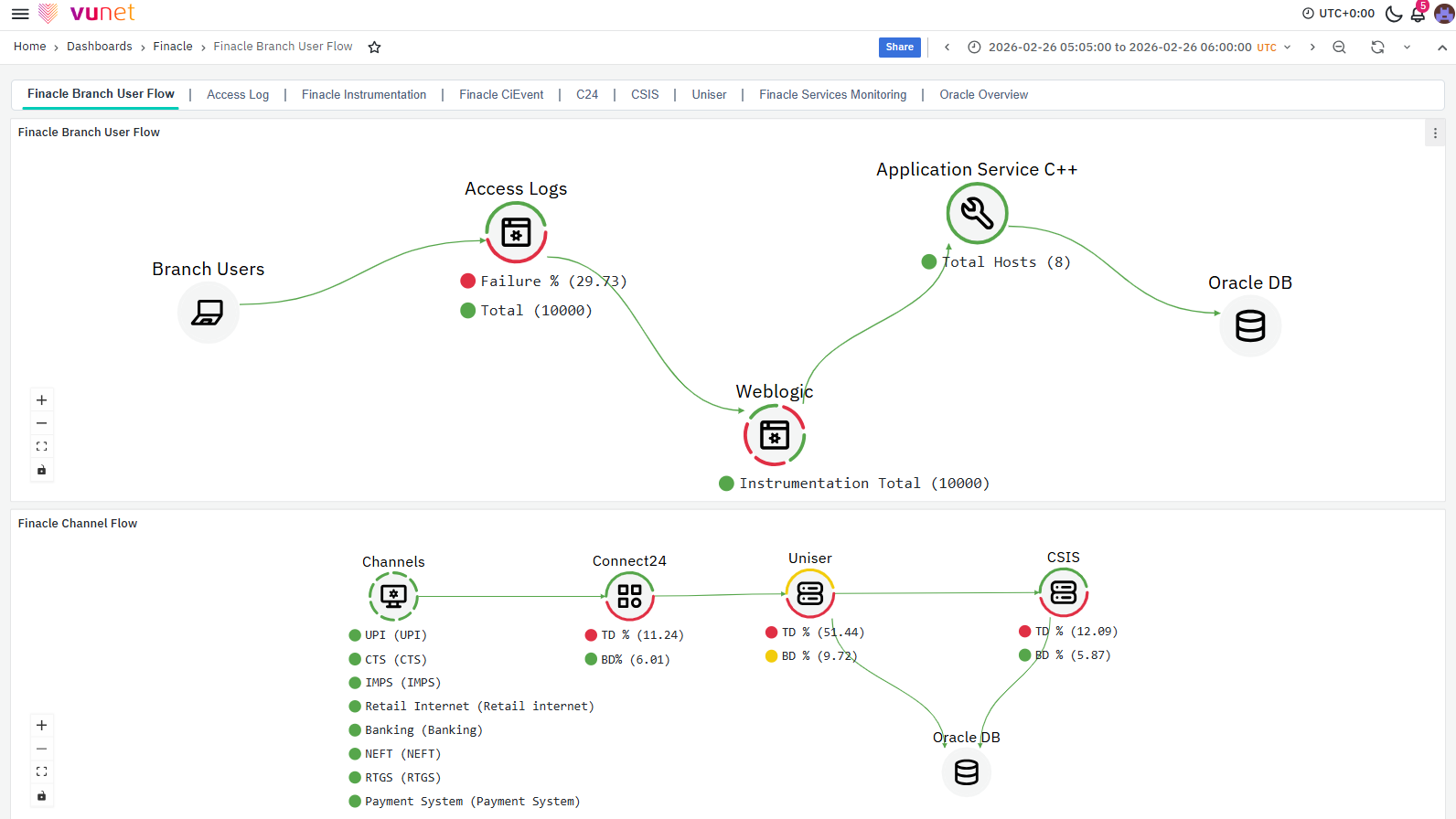
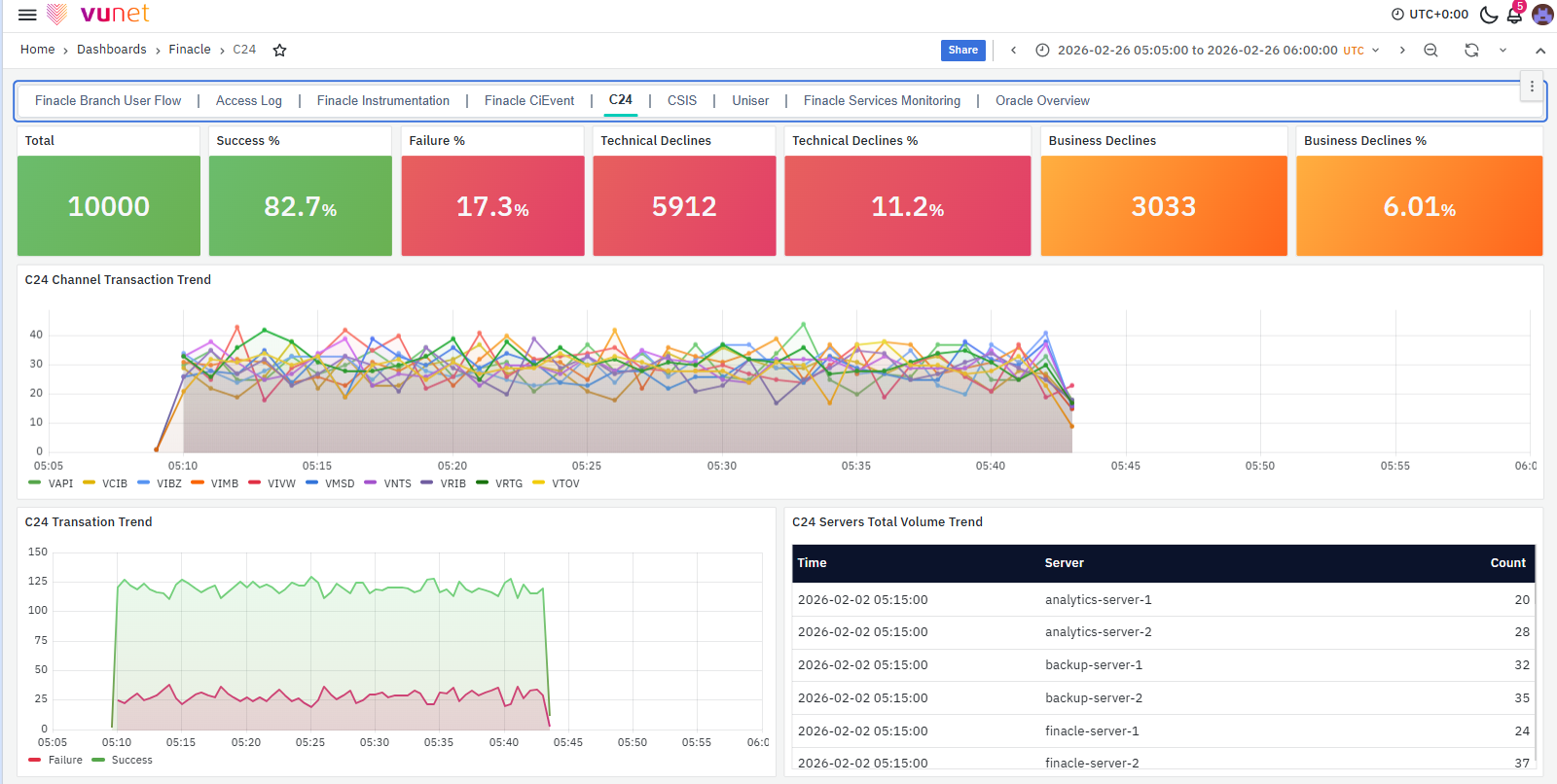
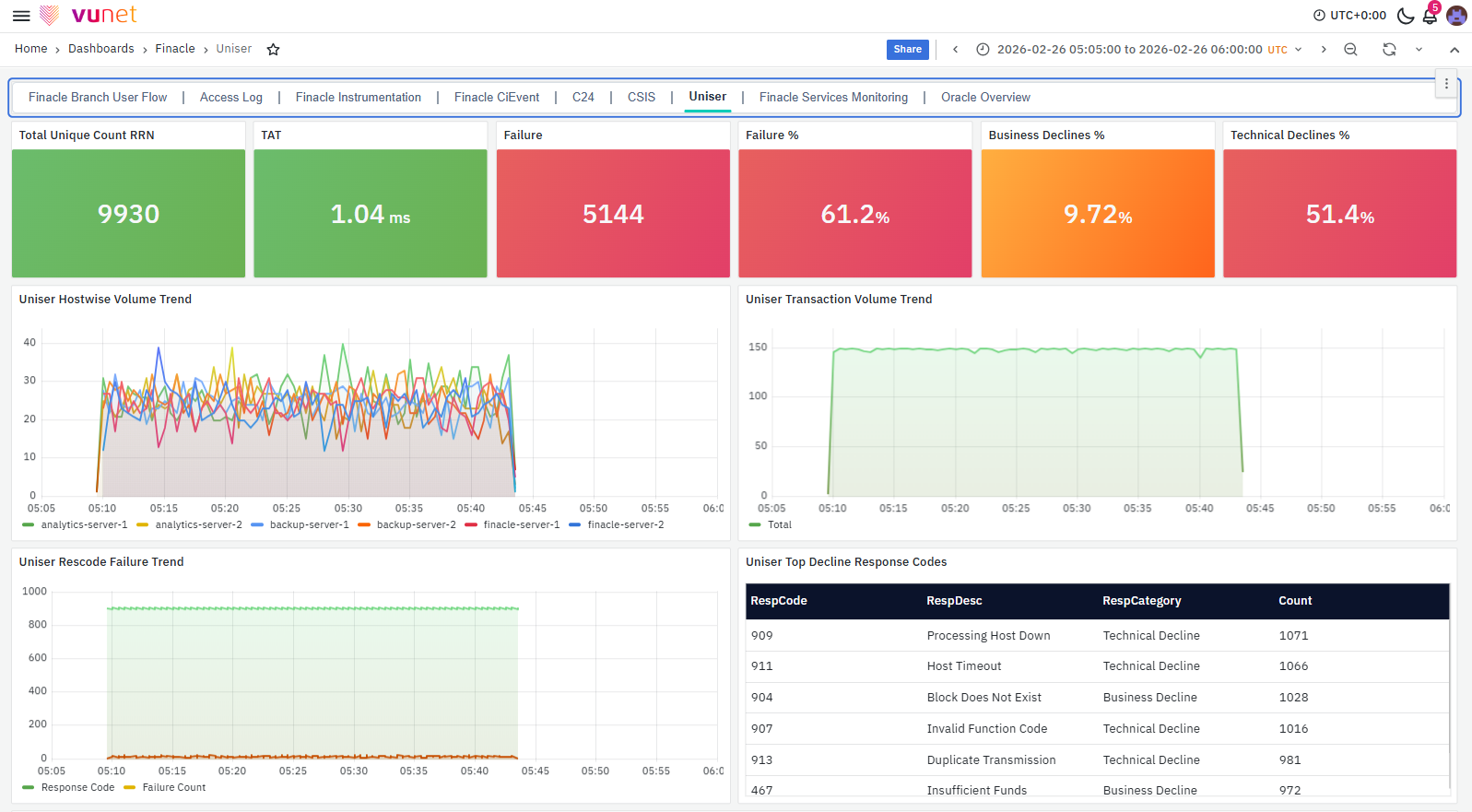
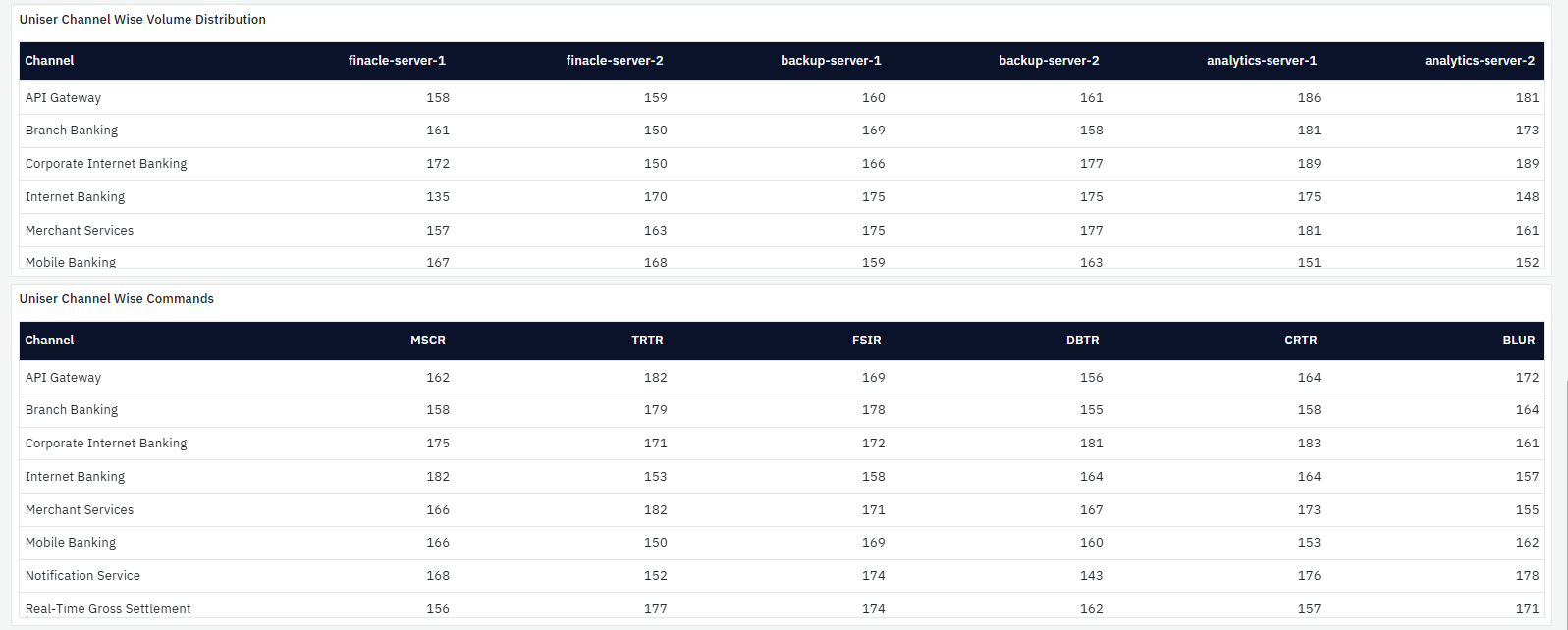
Deliver Reliable Banking Services
As the banking ecosystem continues to become more distributed and digital banking volumes continue to grow, monitoring individual applications is no longer sufficient. Banks need complete visibility into every customer transaction as it moves across channels, middleware, Finacle, databases, payment networks and partner systems.
By combining deep banking domain knowledge, banking-aware log analytics, non-intrusive observability and Business Journey Observability, VuNet helps banks detect issues earlier, investigate and troubleshoot incidents faster and deliver reliable banking experiences at scale.