

Automated discovery, instrumentation, and centralised control across the telemetry lifecycle
As your technology stack changes, can your teams answer this question:
- What are we monitoring
- What are we deliberately not monitoring
- What needs attention?
For most enterprises, that answer gets harder over time as applications modernise, infrastructure expands, and services change to adapt to new business demands.
Every new host, application component, or environment creates an imperative for monitoring. Teams must discover what exists, deploy agents, configure telemetry, and keep coverage current.
When every host requires separate installation, every source needs its own configuration, observability becomes harder to scale.
The next stage of observability maturity requires a repeatable way to establish coverage while keeping rollout effort, agent sprawl, and ongoing management under control.
Telemetry maturity must include operational maturity
Teams have moved from manual, source-by-source configuration towards automated discovery and instrumentation.
But environments keep changing deployment. Workloads change, policies evolve, probes need attention, and hosts are retired. Monitoring needs to keep up with the dynamic evolution of the enterprise.
Real observability maturity means you can always explain your coverage: what is monitored, what is intentionally excluded, and what needs attention.
That requires operational visibility and lifecycle control alongside automation.
A familiar scenario: expanding a customer-facing service
An enterprise is scaling a digital service.
The infrastructure team provisions new hosts. Application teams deploy workloads. Now operations must identify the components, commission monitoring, verify telemetry, and maintain the setup.
Repeated across environments, source-specific installation and configuration can create more agents to maintain, more configuration work, and more coordination between teams. Even routine changes can mean logging into each host separately.
A scalable approach needs to answer these questions:
- Can the rollout be repeated consistently?
- Can monitoring be managed remotely, not host by host?
- Can teams distinguish an intentional exclusion from a coverage issue?
- Can anyone review changes without reconstructing events across tools?
This is where SmartADI comes in.
What SmartADI does
VuNet’s SmartADI combines automated discovery, policy-driven instrumentation, and centralised telemetry operations inside vuSmartMapsTM.
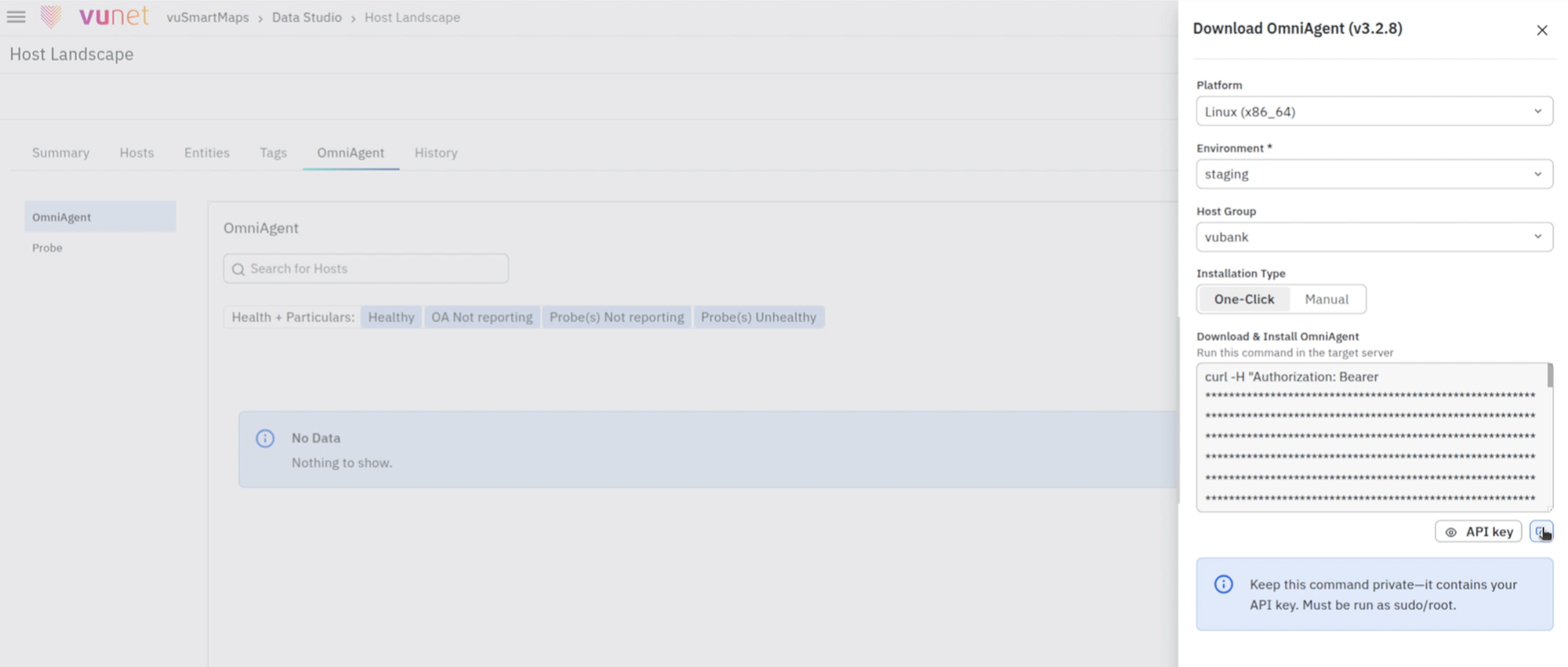
Install a single OmniAgent on each host to discover eligible workloads and enable instrumentation for supported technologies. This reduces the need for separate installers for each telemetry source and repeated source-level setup.
Here is how it addresses four priorities.
- Lower rollout effort and less agent sprawl
Once OmniAgent is installed, SmartADI discovers the host and eligible sources. Applicable policies decide what gets monitored, instrumented, excluded, or left unchanged.
As the environment grows, teams reuse policies rather than treating every host as a separate configuration exercise.
- Operational visibility across the IT landscape
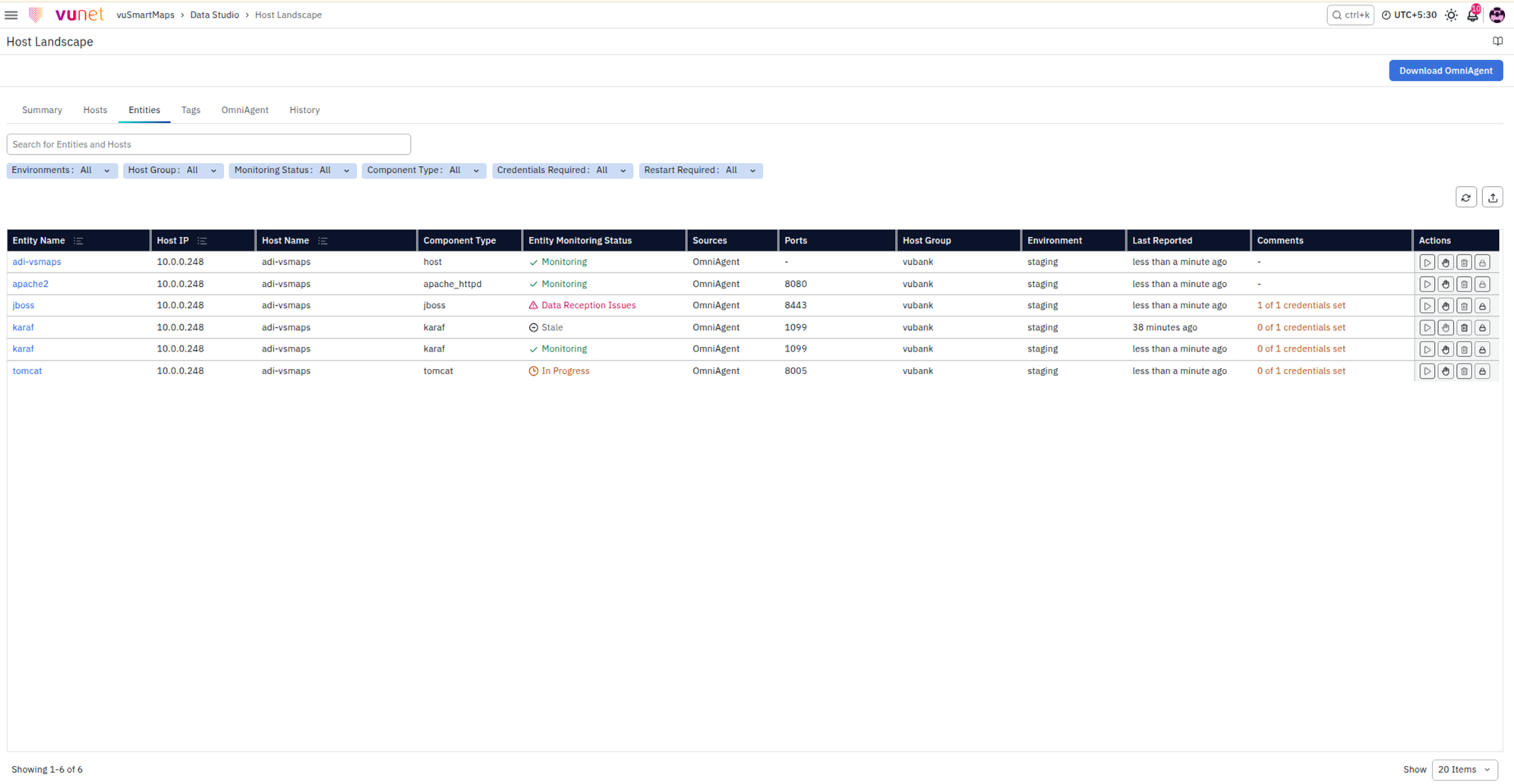
Discovery tells you what exists. Monitoring status tells you whether it’s actually being monitored.
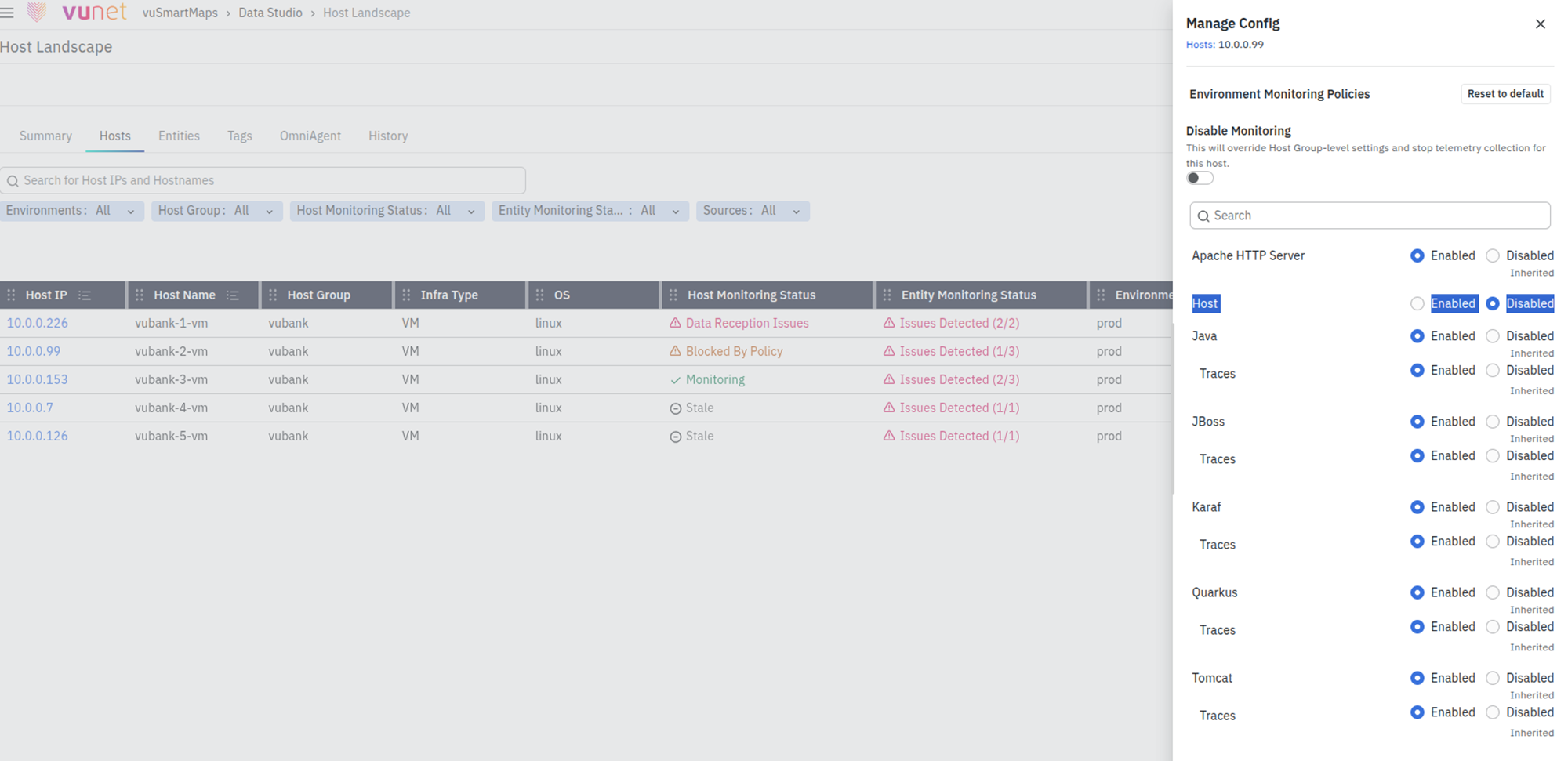
SmartADI brings host, entity, agent, and probe visibility into a central view. Teams can see what needs attention and not assume all components are covered just because they were discovered. For example, a discovered Apache component with a data reception issue is visible as a monitoring concern rather than assumed to be covered.
- Remote management with central control
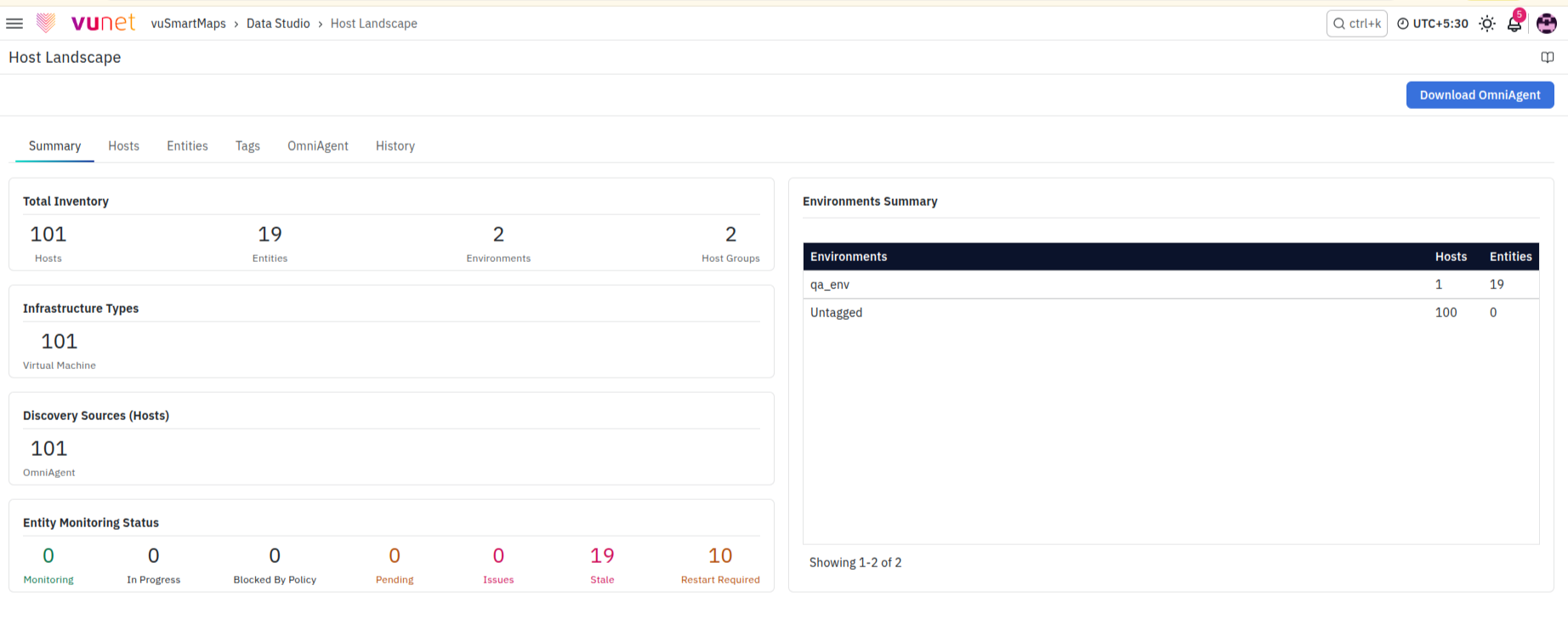
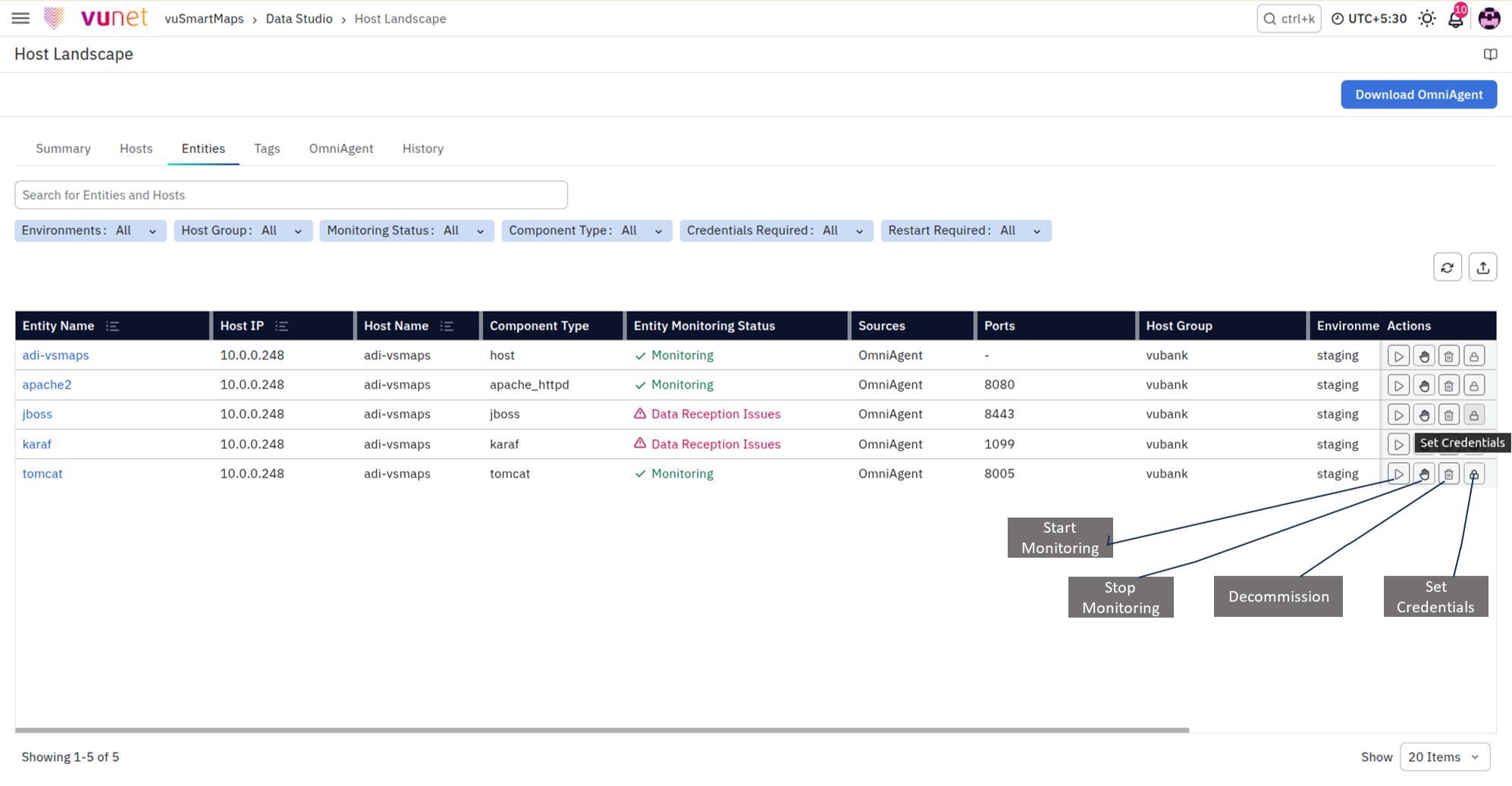
The coverage of monitoring for enterprises changes through the lifecycle of a workload such as pause monitoring, resume collection, update a policy, restart probes, or retire a host.
SmartADI handles this centrally. Teams can apply controlled changes without logging into each host for routine actions. Bulk operations can apply actions across multiple components at once.
Policy controls make intentional exclusions explicit, differentiating a deliberate monitoring decision from an operational issue.
- A record of what changed and when
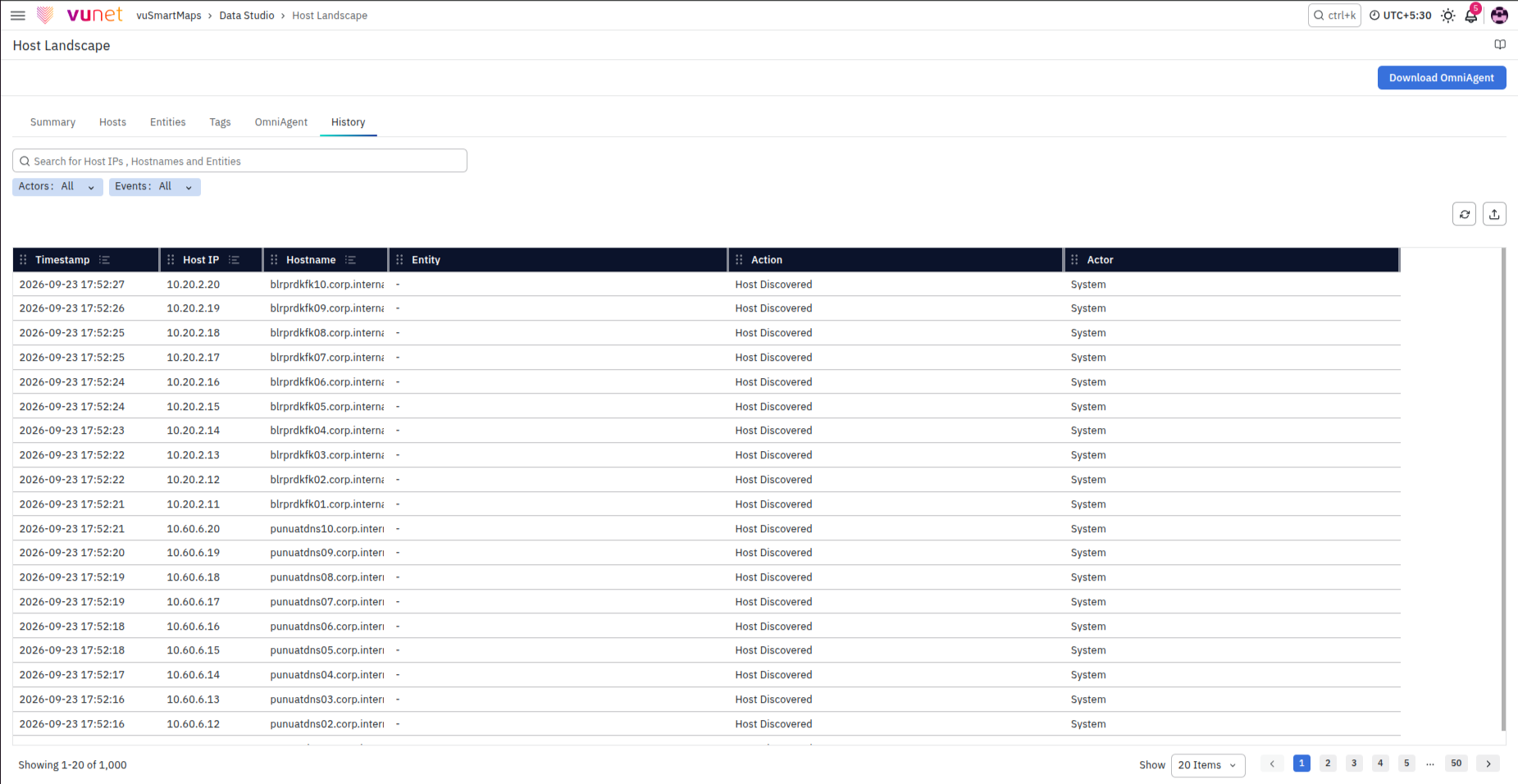
Governed operations require a record of how coverage changed. SmartADI logs every monitoring action with timestamps and user information. Teams can review monitoring attempts, policy blocks, and state changes without reconstructing events across separate tools.
Who benefits
A foundation for environments that keep changing
Automation delivers lasting value when it reduces setup effort and keeps operations manageable after onboarding.
SmartADI connects discovery and instrumentation with ongoing operational visibility and central control. Teams can commission, pause, resume, and retire monitoring as their environments change.
The result is a repeatable approach to coverage: less agent sprawl, less manual coordination, and clearer accountability throughout the telemetry lifecycle.
Explore how SmartADI simplifies telemetry onboarding and centralised operations. Request a demo.